Digital sovereignty does not begin with technology, but with trust – trust in identity, data and institutions.
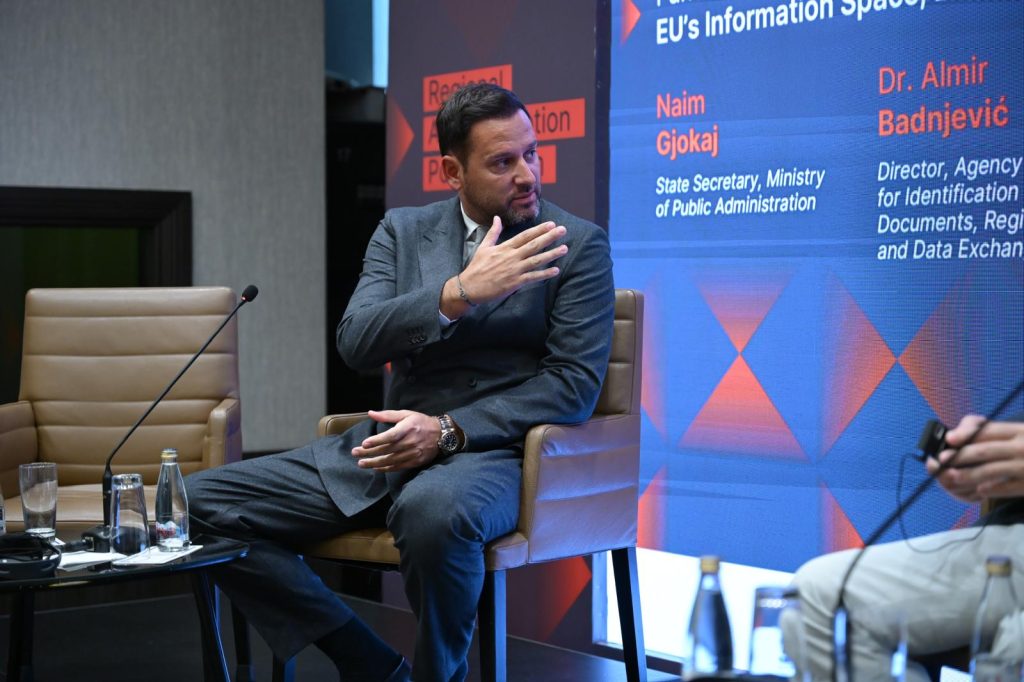
This was one of the key messages delivered by the Director of IDDEEA BiH, Prof. Dr. Almir Badnjević, at the Regional Forum on Anti-Corruption Policy, “Building Democratic Resilience in the Western Balkans: From State Capture to Digital Sovereignty”, held today in Podgorica as part of the Berlin Process activities.
Badnjević participated as a speaker on the panel “Digital Sovereignty and Governance: AI as a Tool for Protecting EU’s Information Space, Economic Security and Democratic Resilience”, where he spoke about the role of digital identity, trusted data and institutional responsibility in developing secure and responsible artificial intelligence systems.
“We can have the best AI system in the world, but if we cannot reliably establish who a person is, where a piece of data comes from, whether it is authentic, and who has accessed it, then we do not have a reliable digital state. AI does not create trust – it inherits it from the data, institutions and infrastructure on which it operates,” Badnjević emphasised.
Speaking about the digitalisation of the public sector, he stressed that the process must first be lawful, transparent and traceable, and only then intelligent.
“Only when we have trusted identity, high-quality and authoritative data, clear rules and the ability to audit every digital action can we responsibly discuss where AI can help us,” the Director of IDDEEA BiH said.
Badnjević emphasised that digital sovereignty does not mean digital isolation or the need for a country to develop every technology on its own. It means that institutions have control over the key elements of the digital system – identity, data, trust infrastructure and the rules governing their exchange – while remaining open to European standards and interoperable solutions.
In this context, he highlighted the importance of Bosnia and Herzegovina’s integration into the European digital identity ecosystem, where citizens’ digital identities and credentials will be able to be used and verified more securely beyond national borders.
“Digital sovereignty does not mean that we have to build everything ourselves. It means that we must be able to make our own decisions about the things that matter most. Our goal is not the digital isolation of Bosnia and Herzegovina, but its full integration into an interoperable European digital space,” Badnjević concluded.