Herceg Novi, 13 October 2026
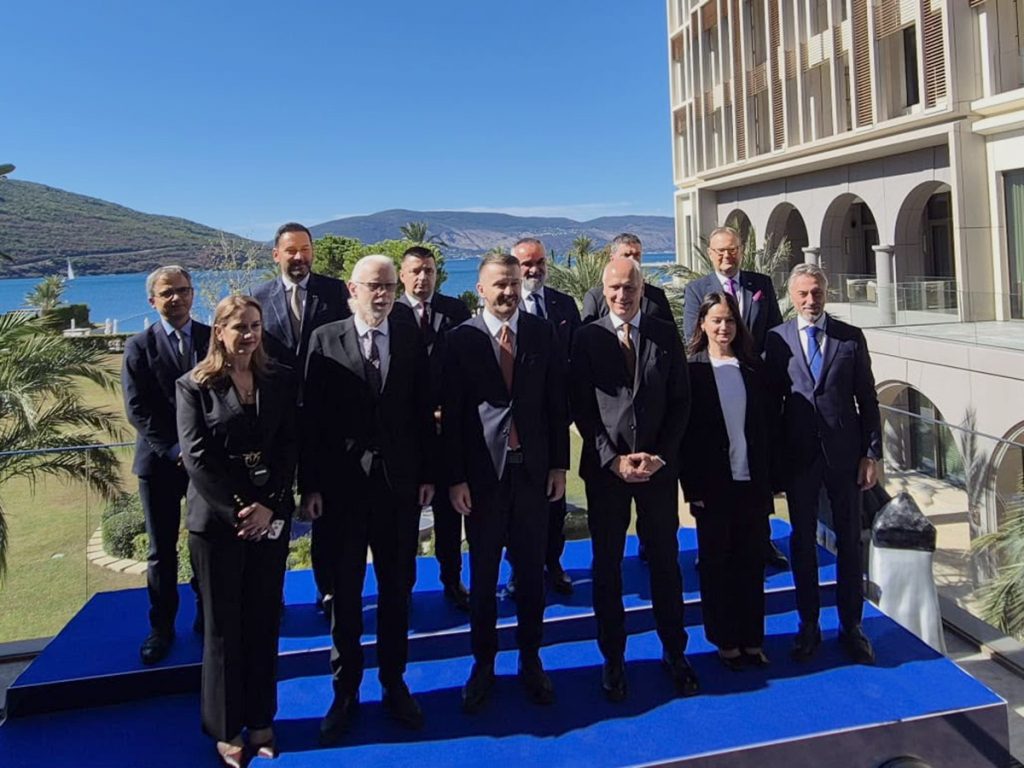
The Director of the Agency for Identification Documents, Registers and Data Exchange of Bosnia and Herzegovina (IDDEEA BiH), Prof. Dr. Almir Badnjević, participated in the ministerial panel of the eighth Western Balkans Digital Summit 2026, held in Herceg Novi as part of the Berlin Process.
At the panel, which brought together representatives of the six Western Balkan economies, Badnjević presented Bosnia and Herzegovina’s achievements in the development of digital identity, qualified electronic signatures and interoperability, and put forward a concrete proposal to establish the first joint regional electronic service.
Speaking about Bosnia and Herzegovina’s digital transformation, he explained that the country has already established centralised digital identity and qualified electronic signature services through IDDEEA. These services provide shared infrastructure for the development of electronic services at all levels of government.
He emphasised that, in accordance with the Constitution of Bosnia and Herzegovina and the distribution of competencies, the development of individual electronic services is decentralised and falls under the responsibility of the institutions competent for the relevant administrative and other procedures. IDDEEA’s role is to provide reliable state-level infrastructure for digital identity, electronic signatures and data exchange, which the competent institutions can use to develop their own digital services.
“Bosnia and Herzegovina already has centralised digital identity and qualified electronic signatures. However, electronic services must be developed by the institutions responsible for them, in accordance with our constitutional arrangements. Our task is not to assume their responsibilities, but to provide them with shared, secure and reliable infrastructure so that citizens do not have to use different identification and signing systems for every individual service,” Badnjević stressed.
Particular attention was drawn to his proposal that the six Western Balkan economies develop a digital wallet with an electronic driving licence (eDriving Licence) as their first joint regional electronic solution, which could be used across all six economies.
Badnjević called on representatives of the other five economies to jointly launch this initiative, which would simultaneously encourage the development and activation of national digital wallets, the introduction of electronic driving licences and interoperability between them.
“Instead of talking about regional interoperability for years, I propose that we start with one concrete solution. Let all six economies develop and activate a digital wallet with an electronic driving licence that our citizens will be able to use throughout the Western Balkans. This is a service that citizens can understand, that offers practical value and that would demonstrate how regional digital cooperation can deliver tangible results. I call on all our regional partners to work together to make this happen,” Badnjević stated.
Implementing such a solution would require the harmonisation of technical standards, security mechanisms and legal requirements for the cross-border recognition of electronic driving licences, while ensuring alignment with the European digital identity framework.
The summit also addressed the Regional AI Roadmap 2026–2030, which envisages the joint development of artificial intelligence capabilities, improved interoperability and stronger digital infrastructure.
Badnjević emphasised that, through its existing state-level digital systems and IDDEEA’s experience, Bosnia and Herzegovina can make a tangible contribution to regional cooperation, particularly in the areas of digital identity, electronic signatures, secure data exchange and future cross-border electronic services.
The proposal for a digital wallet with an electronic driving licence is an invitation for the Western Balkans to move beyond declarative support for digital integration and towards a shared service that citizens can use every day, while preserving the competencies of each of the six economies.